

Soft landing
When correctly applied, natural wood mulch is great, but living mulch, green mulch, or a"soft landing"of native ground cover can be even better for everyone


A soft landing in landscaping and gardening refers to creating a protective, permeable, and organic layer underneath trees and shrubs—typically using native perennials, shrubs, and leaf litter instead of traditional turfgrass or bare mulch. This design mimics natural forest floors, providing critical habitat, shelter, and a safe transition for beneficial insects (like caterpillars dropping from the canopy to pupate) and wildlife.
Green mulch (also known as living mulch) is a gardening technique where low-growing ground covers are deliberately planted between primary crops or ornamental plants to occupy the soil surface. Rather than leaving bare soil or applying dead matter, these living plants act as a protective blanket.
We can assist you with plants or plugs that will be appropriate under specific trees and shrubs, to look beautiful, perform well, and best of all-- improve the lives of pollinators, songbirds and other wildlife, the health of your trees, curb appeal, and more. Native sedges in particular look natural and lovely, and are well-suited for shady, dry areas under trees and around roots.
Benefits of Green Mulch and Living Mulch
-
Weed suppression
-
Moisture retention
-
Temperature regulation
-
Soil Erosion prevention
-
Nutrient cycling and fixation
-
Enhanced biodiversity
-
Improved soil structure

A soft landing of densly planted crocus can be the first of several layers of seasonal beauty to bloom in your mulch ring.
Special benefits for songbirds & backyard wildlife
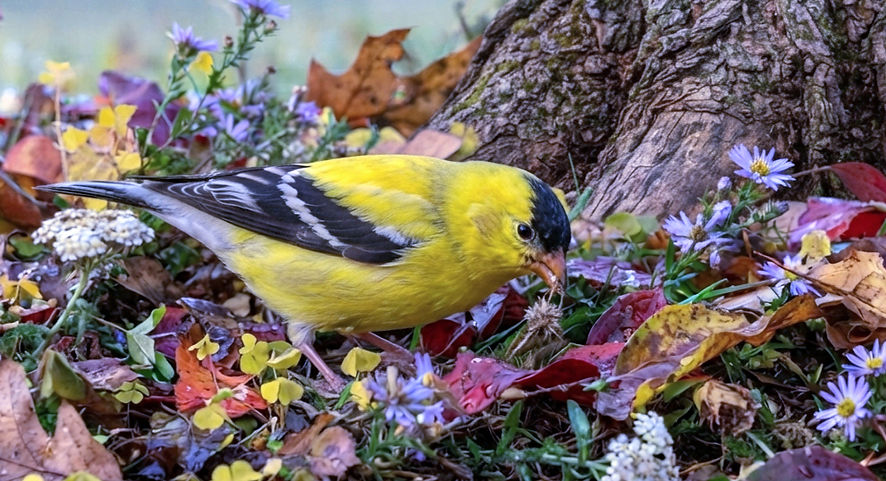
Plant your mulch ring, leave the leaves, and your tree and wildlife will love you for it.
-
Abundant Insect Food Source: Soft landings and living mulches support a thriving micro-ecosystem of beetles, spiders, caterpillars, and native bees. For breeding songbirds, this dense insect population is an essential high-protein food source needed to feed their nestlings.
-
Foraging Habitat: Ground-feeding birds (such as thrushes, towhees, and sparrows) naturally comb through organic leaf litter, loose soil, and low-growing ground covers to scratch for seeds, grubs, and hidden insects.
-
Nesting Materials and Cover: Dense vegetation and natural debris offer safe cover and nesting sites for ground-nesting birds, amphibians, and small mammals, protecting them from harsh weather and predators like hawks and domestic cats.
-
Safe Pupation and Life Cycles: Many beneficial insects and butterflies rely on the undisturbed organic matter beneath soft landings to overwinter or pupate safely away from foot traffic and lawn mowers, ensuring the next generation of wildlife food is sustained.
A Literal Soft Landing:
Most baby birds fall before they fly, so these plants around trees can provide a literal soft landing for nestlings who fall from the nest and land on plants and camouflage rather than hard mulch, rocks, etc, where they will be left in the open and more vulnerable to predators. The same holds true for pollinator caterpillars, baby squirrels, baby bats, and other tree-dwellers. Baby rabbits, chipmunks, and other small mammals will also appreciate the addition of safe places to hide in plants at the base of trees.
This tiny, vulnerable baby was semi-camouflaged by mulch. Her hiding place from predators is made even safer by plants growing in the mulch.

Both underlying mulch and plants should be kept at least several inches away from the trunk and all exposed tree roots. Avoid using invasive, non-natives such as English ivy, Pachysandra, Vinca/Myrtle, Creeping Jenny, and Liriope.